Experience of sampling Atlantic salmon in Maniitsoq Greenland September 2021.
I was allocated the second sampling slot ( 20 – 30 th Sept)in Maniitsoq as part of the North Atlantic salmon monitoring programme. I would like to thank Tim Sheehan project leader from NOAA staff at AFBI and DAERA salmon fishery team in Northern Ireland for the opportunity to assist and participate in this sampling programme. It is certainly of great interest to be involved since I have been a keen Atlantic salmon conservationist for many years and assisted at The Agri-Food Bioscience Institute, (AFBI Natural and Marine Environment branch) as an Assistant Scientific Officer collecting salmon data from rivers through- out Northern Ireland, including assessment of juvenile salmon habitat and juvenile density surveys.It is exciting to know that some salmon from Ireland may be caught in Greenland and that some will return from Greenlandic waters to spawn in Ireland.
After first agreeing to travel to Greenland to conduct the sample collection I soon realised that it was quite challenging to travel during a COVID pandemic, as many travel restrictions were in place. Much time was spent chasing flight connections and obtaining relevant paperwork to fly which included not only the usual passport but additional forms such as passenger locator forms, eu vaccination certificate, pre-travel covid tests and loading all this information on to the online app to obtain check-in and a boarding pass. I flew from Dublin to Copenhagen to Kangerlussuaq and then on to Maniitsoq an isolated town with a population of around 3000 people. In addition, sampling materials needed to be carried manually to Greenland though I did manage to post the collected samples and equipment from Greenland (Kr 900). Travel was not as straight forward as it used to be but hopefully in time it will become more straightforward to travel again.
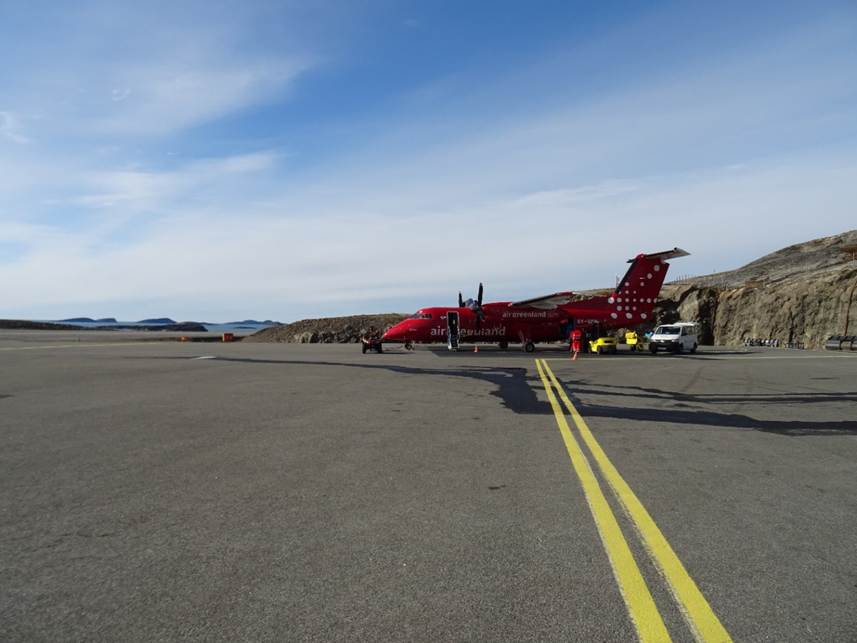
Maniitsoq Airport
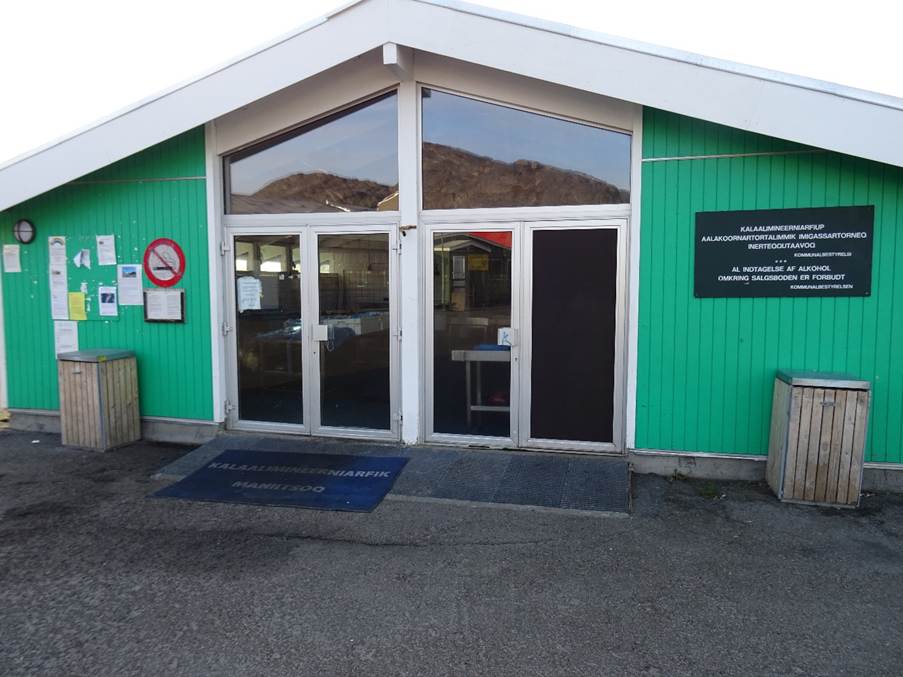
The Fish and game market in Maniitsoq
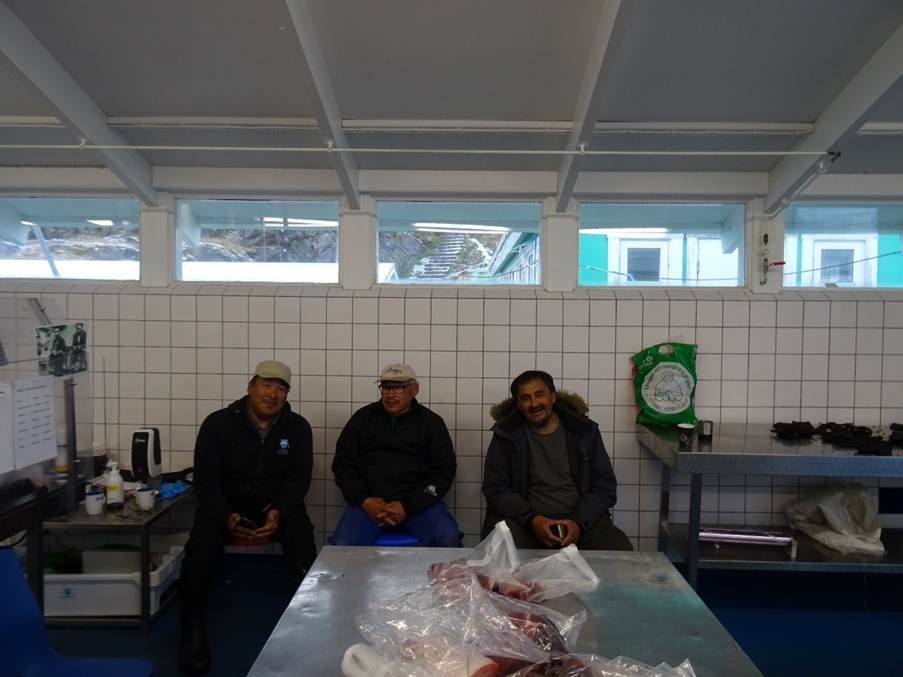
The Fish and game market with some helpful faces despite language barriers.
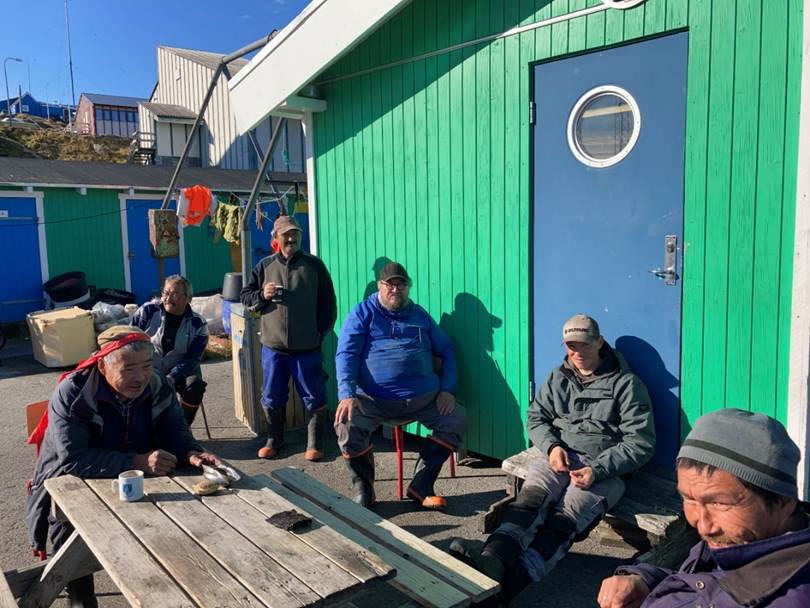
Some fishermen and hunters
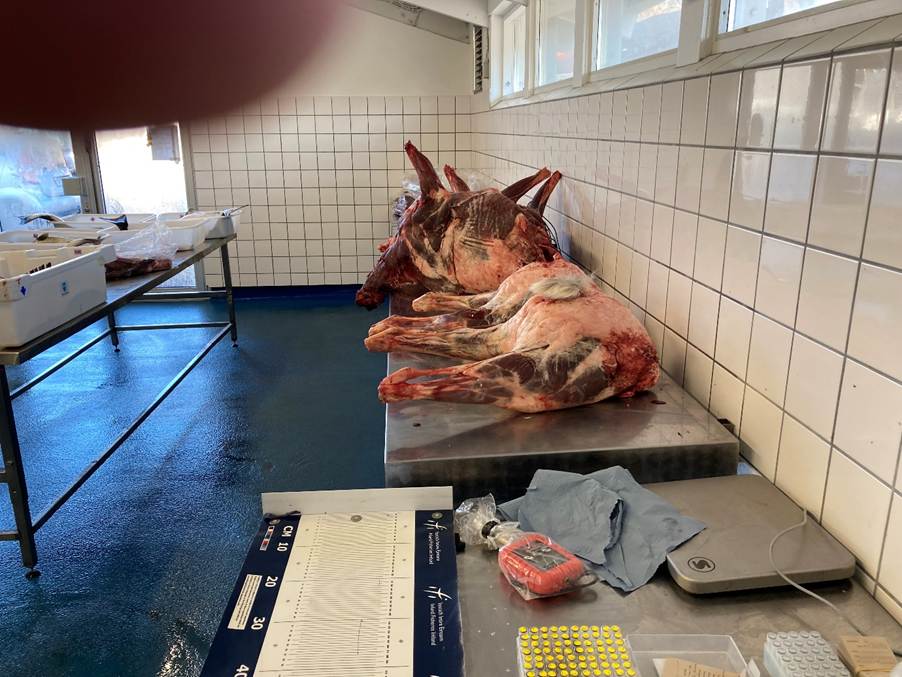
Many different species (fish and mammals) arrive into fish market and wet room and sometimes sampling space was a little cramped though manageable.
I arrived in Maniitsoq in good time to start sampling with a bit of overlap between myself and my colleague Paddy Gargan from Inland Fisheries Ireland who was sampling the 10 previous days. I was glad to gain from his experience and his contacts at the fish market. They were catching as lot of fish with up to 100 coming in each day. The fishery was closed early on 22nd of due to quota being caught.
The salmon (Kapisilits) arrived into the fish market at Maniitsoq from local fishermen through out the day at no specific times. Other landings included hunting bounty from licensed Greenland hunters including porpoises, seals, minkie whales, reindeer Musk ox ( I even saw a white Hare coming of a boat) cod, halibut and other fish. The fish market was a moderately sized green building with limited space. Everything was gutted and processed ( Fish and Mammals) in a small wet room of to the side of the public sales display area where the local public came in to buy their fresh natural food products of fish or mammal and where the sampling table was located.
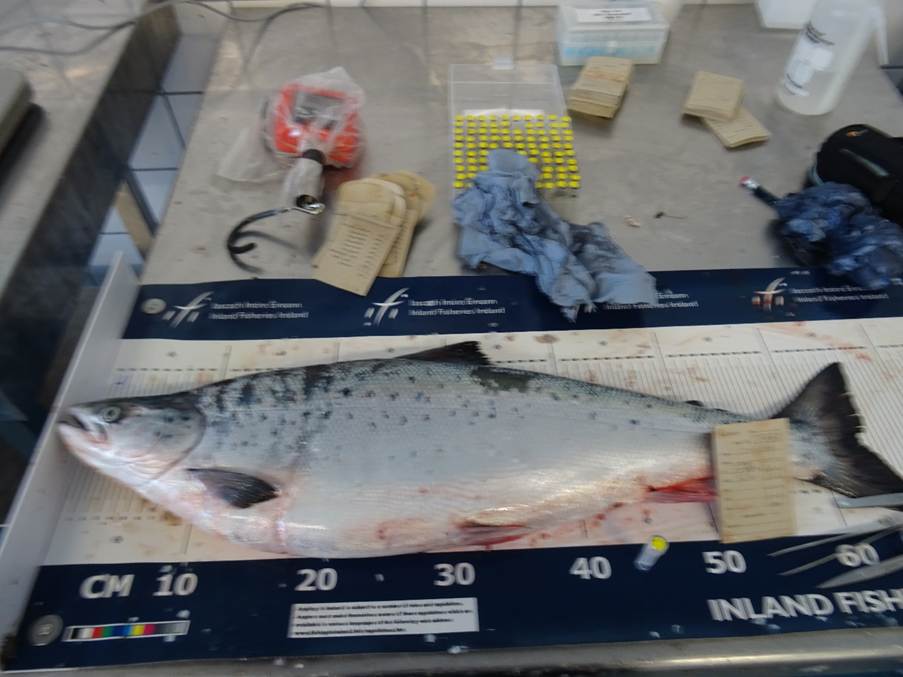
Sampling Table
Our sampling area was a little table just big enough for the job in close proximity to the busy processing floor where up to ten other fishermen and market staff at busy times.
Some fishermen were willing to assist with the survey and were content, to place their boxes of salmon in close proximity to the sampling station before processing. Every effort was made to fully sample the fish and it could be a challenge on occasion to keep an eye on what was coming in whilst focusing on collecting the sample data. A small number of fishermen had no interest in waiting to have their fish sampled possibly because they wanted to get on with processing their catch as quickly as possible. A quick observed count was made of unsampled fish as they came in. However, it was often quite busy with 2 or 3 boats landing in together. A typical batch landing my have been up to 40 fish and any number right down to one. Each fishing crew/ single fisherman had responsibility for preparing their individual catches and there were many busy sampling periods so as to avoid delaying the fishermen in their activities to get their fish processed and on the customer display as quickly as possible. When fish were sampled, they were handed back to the fishermen to process for market display.
Processing by the fishermen included descaling with a water hose, gutting and sometimes filleting before being taken to the customer display area. Generally, all the fish were sold within a day or two from the public display.
Occasionally space was at a premium and on occasion the sampling table would be taken over by a huntsman to weigh out pieces of his seal inners minkie whale , porpoise, seal Musk ox or reindeer.
Fish and mammals such as porpoises, and seals were processed together with carcases of musk ox and reindeer. There were a few quiet moments too which were greatly appreciated as time to get organised for next batch and to identify who caught what from the display boxes.
Maniitsoq hotel is very conveniently placed to observe fishing boats returning to harbour. Sampling days generally started about 8.30 am with much waiting around for catches to come in. Boats were generally all in by 16.00hrs and the market closed at 17,00hrs on weekdays and 15.30 at weekends. After a few days, boats and fishermen were identifiable. There wasn’t anyone around the fish market who had more than a few words of English, so conversation was difficult and much visual communication was needed.
In the main most of the fishermen were friendly enough when they needed to be, but it was good learning to identify who to avoid especially when it got busy. The weather was exceptionally good with no storms and always calm bright and sunny. Perhaps I was just lucky. It was rewarding to experience something of the hunter gatherer and subsistence culture that is still important in Greenland.
All in all it was a great experience in data collection and especially since it was my first time to visit Greenland.
Thankyou
Brendan Kerr